
© www.duffieldderbyshire.co.uk 2002-2016
Make your own website with Xara Web Designer
Duffield - A brief history of the village
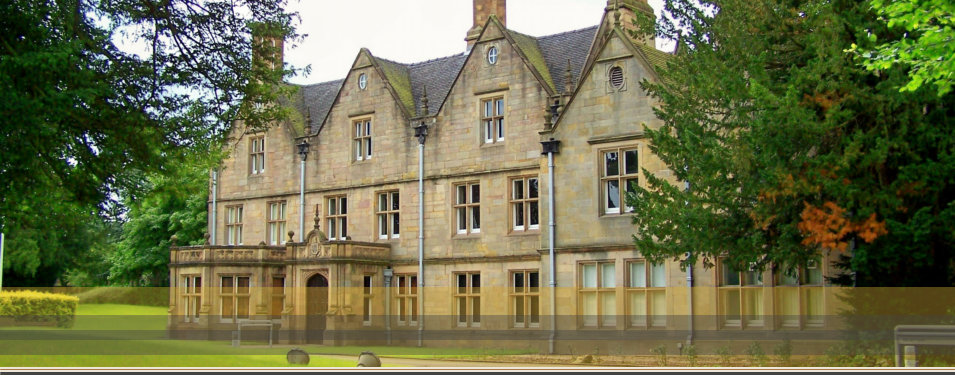
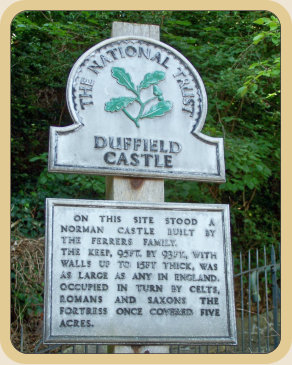
It is said, that there may have been a settlement here in Duffield, situated close to the junction of the rivers Derwent and Ecclesbourne since Roman times. Certainly, Roman pottery was produced at nearby Hazelwood and the river crossing at Muleford, now Milford, was also used in those times. The date for the establishment of the village of Duffield can be narrowed down to Saxon times since the Saxon Earl Siward Barn, held the manors of Duffield, Breadsall, Morley and Markeaton, which proves the existence of the manor and village of Duffield in the late 11th century. In 1068 Saxon Earl Siward Barn joined forces with Earls Morcar and Edwin in an unsuccessful rebellion against William the Conqueror who put down the rebellion with such ferocity and laid waste to the rebel lands. Duffield, being part of Siward's domains must have suffered this retribution, Siward's lands were confiscated and redistributed to the Norman, Hugh de Abrincis. Hugh de Abrincis was later granted larger domains in Cheshire and surrended the Honor of Tutbury, (which included the Manor of Duffield) back to the King, William the Conqueror, who bestowed it on Henry de Ferrers. In Norman times Duffield's importance grow, with its location being the main approach to Duffield Frith, a Royal Forest approx. 30 miles in circumference, which was well stocked with deer, survey of the lands were taken every 3 years and in 1560 there were 12,000 Oak trees in the Frith although 27 years later there were only half as many. There is a question of doubt as to who built Duffield Castle but there no doubt that one of the Ferrer's family started the construction. It is possible the Henry de Ferrers began in the late 11th century and it is also possible that Henry's third son Robert de Ferrers the First, built or started to build at Duffield to celebrate his ennoblement as Earl of Derby in 1138, following his exemplary action at the Battle of the standard of that year. The castle dominated the Duffield landscape for 90 years and excavations on the site show that it measured 105 feet x 93 feet and had walls 15 feet thick. The National Trust visited the site of the castle in 2009 and visitors were shown around the site. The Trust experts displayed local artefacts and explained to visitors about the remains of the castle that were still visible. This is a link to an album of photos taken on the day. Link>> The 13th century saw the end of the castle, after Robert de Ferrers III, who with along Simon de Montfort of Leicester rebelled against King Henry III of England, was badly defeated. Although he was pardoned for his actions, he later got involved in another plot and this time the king dispossessed him of his his lands and sent a Royalist force to destroyed the castle. (Some people never learn ,do they?). The Frith was passed on to the Earl of Lancaster and became a royal possession in 1399. Although it remain a royal preserve until the reign of Charles I, its importance dwindled. Another connection to King Charles I, is that, Judge John Bradshaw who presided at his trial and was the great uncle of Anthony Bradshaw who in the 15th century, was the deputy steward of Duffield Frith and I would think was a rather energetic man, with his two wives and twenty children. Duffield is listed in the Doomsday Book of 1086 as follows.. The translation reads... In Duffield, 'Bradley', Holbrook, waste, Milford, waste, Makeney, waste and 'Herdby' Siward had 7 carucate of land taxable and the sixth part of 1 carucate Land for 7 ploughs and sixth part of 1 plough. Now in the lordship 3 ploughs; 32 villagers, 8 smallholders and 10 slaves who have 8 ploughs. Meadow, 20 acres; woodland pasture 4 leagues long and 2 wide. A priest and a church; 2 mills, 8s. Value before 1066 £9; now £7. In 'Herdby' Henry has the sixth part of 1 carucate. The land was given to him by Duke William of Normandy (William the Conqueror) who conquered England in 1066. Henry was the largest landowners in Derbyshire, although most of his holdings were west of the river Derwent, his hiers were Earls of Derby and Nottingham from about 1138. The name 'Siward' refers to Siward the Dane, (an enemy of Macbeth) who was Earl of Northumbria, one of the 3 great Earls appointed by the Danish King Canute after he became king in 1016. Carucates were measures of land equivalent to the Danish measures called 'Hide',a hide being approx. 120 acres. 12 carucates to the 'Wapentake' or 'Hundred', A 'Hundred' being another Danish measure of area. The other village names still survive today with exception of Bradley, which was possibly the name of an earlier settlement replaced by Belper. Although the 'Bradelei' (Bradley) name is still being used around the Belper area today. As are 'Appletree' and 'Ferres' in the village of Duffield (Check out the street map). Duffield was one of the Royal Manors sold by Charles I. Part of the manor came into the possession of Thomas Newton, who is believed to have built the present hall in the 1620's. The Newtons of Duffield Hall died out in 1709 and the estate passed successively through the families of Coupe, Porter, Bonell and Crompton. Over the years the hall was much altered in style but when Roland Smith acquire it in 1860, he determined to restore its Jacobean character. Smiths improvements were completed in 1871 and his family continued to live in the hall until after the First World War. The building was then occupied for over 40 years by a private girls school " St. Ronans" and it even had its own outdoor swimming pool in the grounds which was fed from a nearby stream. Most bracing, I would have thought. The Derbyshire Building Society acquired Duffield hall in 1973 and after major renovation and the building of a new office block,the hall was officially opened in 1978 as its headquarters. The building had been left derelict for some time, until, in the 1975-8 it was completely renovated and now forms part of a six acre site which was the headquarters of the Derbyshire Building Society . In May 2013, it was announced that the Derbyshire, Cheshire and Dunfermline brands would be phased out over two years, and branches either rebranded under the Nationwide brand or closed. The building society now, no longer occupies the site. Duffield these days is situated 5 miles north of Derby, on the A6 trunk road, just south of the famous Peak District National Park. There is a nice reference page in Wikipedia about Duffield Castle, Duffield. A more detailed history of the De Ferrers family can be found in a copy of Duffield Frith - History & Evolution of the Landscape of a Medival Derbyshire Forest by Mary Wiltshire, Sue Woore, Barry Crisp & Brian Rich.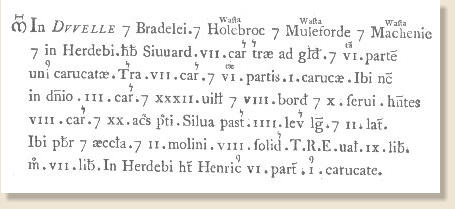

www.duffieldderbyshire.co.uk